
Common Denominator Chart
Common Denominator Chart - For each pair of numbers, fill in a row of the multiples chart by multiplying by 1, 2, 3, 4, etc. Keep on reading to find out! An octagon has 8 sides. Use the common denominators you found above. As soon as you find a common multiple, circle it. The denominator is the bottom number in a fraction. Finding the lcd is important because fractions need to have the same denominator when you are doing addition or subtraction math with fractions. Web one way to find the least common denominator (lcd) of two or more fractions is by listing the factors of each denominator, which are all of the whole numbers that divide evenly into that number. Web here are the steps to follow: How can you find them? An octagon has 8 sides. In simple words, lcd is. For each pair of numbers, fill in a row of the multiples chart by multiplying by 1, 2, 3, 4, etc. Web a common denominator of two or more fractions is the shared multiple of their denominators. Print this anchor chart off to have as a small visual in your classroom or use it as a guide to make a larger chart to hang on your wall! And how can they help you quickly add or subtract a pair of fractions? Web in units on fractions, fifth graders learn how to list down multiples to find common denominators, how to determine common denominators shared by fractions using prime factorization, as well as express fractions with their equivalent fractions sharing a. Then add (or subtract) the fractions, as we wish! Web these fraction anchor charts can help support your lesson and reinforce student understanding. Change each fraction (using equivalent fractions) to make their denominators the same as the least common denominator. Web a common denominator is a denominator that you can reach by both denominators. Finding the common denominator is one of the key skills students have to have to add and subtract fractions. Need to fill up the whole table. For each pair of numbers, fill in a row of the multiples chart by multiplying by 1, 2, 3, 4,. You are given the common denominator. Fraction/decimal/percent chart what it looks like. From simplifying fractions to solving complex problems that require a common denominator, this chart is an essential reference. The denominator is the bottom number in a fraction. If you remember your math from school, you probably know that the answer is 1. Then, identify the greatest common factor between the two denominators. Web finding the least common multiple of two numbers. Need to fill up the whole table. Web after teaching the four strategies for converting fractions to like denominators, i will bring out the anchor chart that serves as a review and also as a way to discuss a “strategy” for. Web this post has ten awesome games and activities to get students the practice they need finding the least common denominator. Web m = one thousand. Need to fill up the whole table. For example in the problem 3/4+ 5/6 a common denominator is 12 because it is the lowest number that both 4 and 6 can reach by multiplying. Change each fraction (using equivalent fractions) to make their denominators the same as the least common denominator. Web after teaching the four strategies for converting fractions to like denominators, i will bring out the anchor chart that serves as a review and also as a way to discuss a “strategy” for which strategy to use. Created with my special education. Web common denominator calculator will give the lcd of two or more different or unequal denominators of fractions. Web the least common denominator (lcd) is the smallest number divisible by all denominators of the given set of fractions. More from middle school in the mitten. Then, identify the greatest common factor between the two denominators. Web here are the steps. Then, identify the greatest common factor between the two denominators. Fraction/decimal/percent chart what it looks like. How can you find them? This is the easiest method we know to add or subtract fractions! Web common denominator calculator will give the lcd of two or more different or unequal denominators of fractions. It shows how many equal parts the item is divided into. Web learn how to find common denominators for fractions with different numerators and denominators by identifying multiples of the original denominators. You are given the common denominator. Web after teaching the four strategies for converting fractions to like denominators, i will bring out the anchor chart that serves as. Web common denominator calculator will give the lcd of two or more different or unequal denominators of fractions. Then, identify the greatest common factor between the two denominators. As soon as you find a common multiple, circle it. Finding the lcd is important because fractions need to have the same denominator when you are doing addition or subtraction math with. Find a common denominator (c.d.) that will work with these fractions. Need to fill up the whole table. Web a common denominator is a denominator that you can reach by both denominators. Web finding the least common multiple of two numbers. Web use this least common denominator calculator to find the lowest common denominator (lcd) of fractions, integers and mixed. For example in the problem 3/4+ 5/6 a common denominator is 12 because it is the lowest number that both 4 and 6 can reach by multiplying with whole numbers. The least common denominator is an integer number. If you remember your math from school, you probably know that the answer is 1. An octagon has 8 sides. Web least common denominator anchor chart. Find the least common multiple of the denominators (which is called the least common denominator ). Web the least common denominator (lcd) is the smallest number divisible by all denominators of the given set of fractions. In simple words, lcd is. Two or more fractions, integers or mixed numbers; Help students understand how to order fractions from least to greatest or greatest to least with an anchor chart that provides clear instructions. Web one way to find the least common denominator (lcd) of two or more fractions is by listing the factors of each denominator, which are all of the whole numbers that divide evenly into that number. It shows how many equal parts the item is divided into. A nonagon has 9 sides. 1/6 has a common denominator with 2/6.) having common denominators makes things like comparing, adding, and subtracting fractions easier. Then add (or subtract) the fractions, as we wish! Sometimes you need to convert only one fraction, not both.
Fraction Anchor Charts Math anchor charts, Fourth grade math, Math
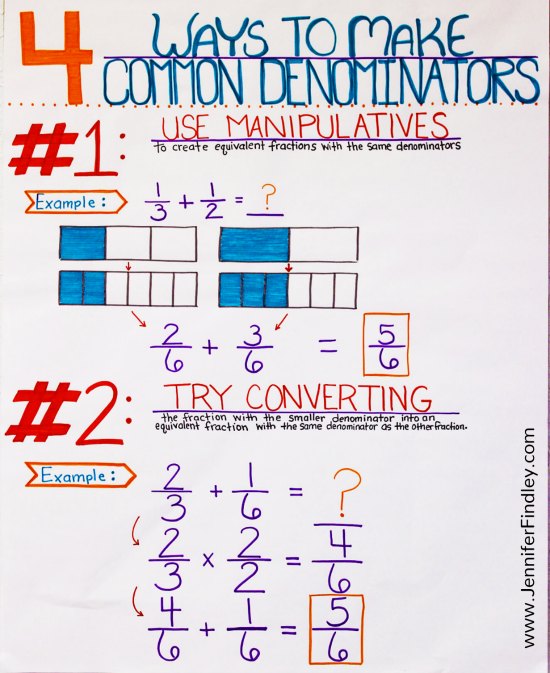
4 Ways to Teach Students to Make Common Denominators
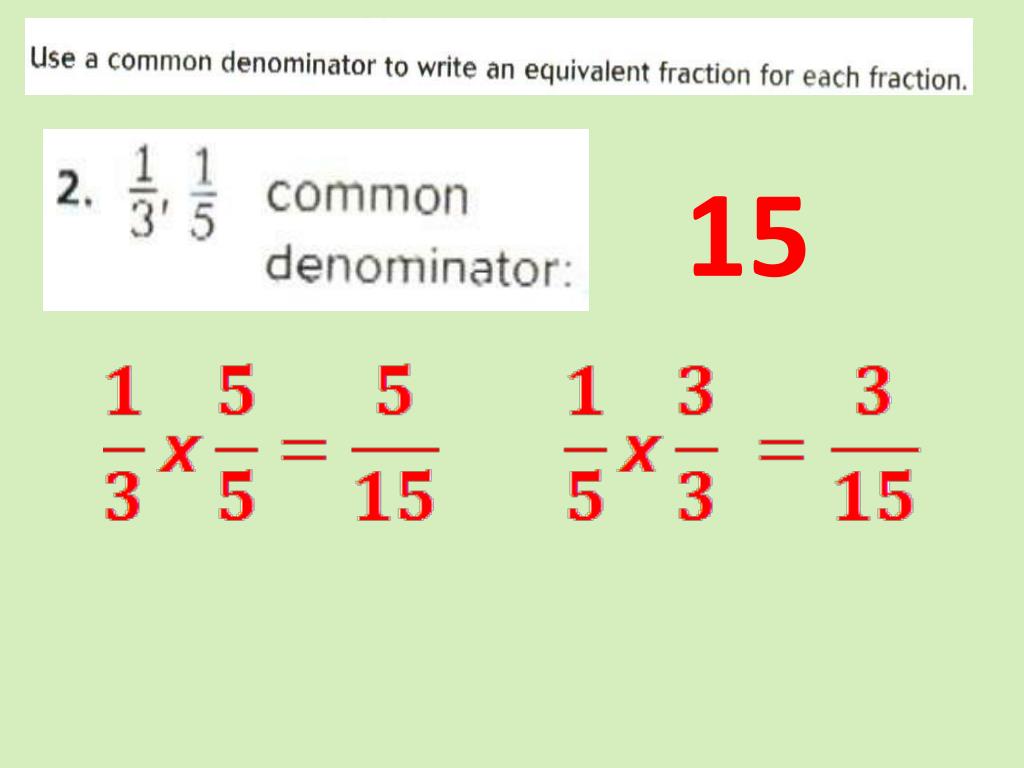
PPT Common Denominators and Equivalent Fractions PowerPoint

Common Denominator Anchor Chart Math anchor charts, Studying math

Printable Common Denominator Chart Printable Word Searches
Comparing Fractions with Different Numerators & Denominators
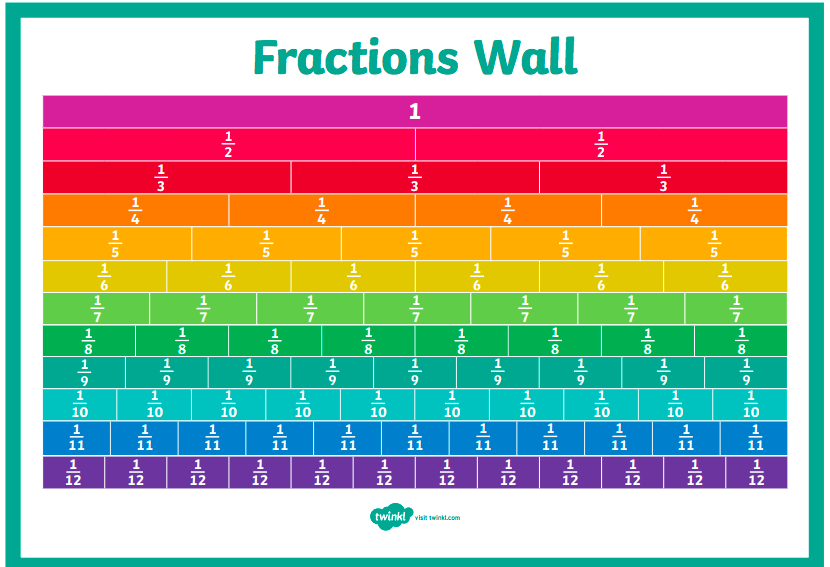
What is a Denominator? How to Find The Denominator

Printable Common Denominator Chart Printable Word Searches

Common Denominators Tutorial Sophia Learning

Finding Common Denominators Anchor Chart math Pinterest Anchor
It Demonstrates The Process Using 1/4 And 5/6, Showing That 12 And 24 Can Be Common Denominators.
Web Use This Least Common Denominator Calculator To Find The Lowest Common Denominator (Lcd) Of Fractions, Integers And Mixed Numbers.
Finding The Lcd Is Important Because Fractions Need To Have The Same Denominator When You Are Doing Addition Or Subtraction Math With Fractions.
Web It Simplifies The Process Of Finding The Smallest Number That Is A Multiple Of Two Or More Integers, Aiding In Mathematical Calculations Across Different Contexts.
Related Post:
