
Disc Brake Rotor Minimum Thickness Chart
Disc Brake Rotor Minimum Thickness Chart - As shown here in figure 1 the base brake article contains a section titled technical specifications. If your rotor has worn past this thickness or needs to be cut, you need new rotors. Choosing to ignore rmt is a safety risk. Refer to relevant service information for unknown vehicles. Continued use of disc rotors below rmt can lead to brake system failure. Web measure rotor disc thickness at a minimum of six locations, but preferably at eight equidistant points along the rotor — at 12 o'clock, 45 degrees, 90 degrees, 135 degrees, 180 degrees, 225 degrees, 270 degrees. Web most specifications for rotor thickness are found in the “base brake” articles. Web each vehicle manufacturer specifies a minimum thickness for brake rotors, which is the lowest allowable measurement for safe operation. Disc brake rotor minimum thickness (rmt) is the minimum safe working thickness of a rotor. These specifications are typically found in your vehicle’s owner’s manual or the vehicle’s repair manual or stamped directly on the rotor. This is usually found on the hat (the central portion of the rotor), within the cooling veins, or on the outer edges. Web the average difference between nominal and machine to thickness is.050″ to.060″. Web measure rotor disc thickness at a minimum of six locations, but preferably at eight equidistant points along the rotor — at 12 o'clock, 45 degrees, 90 degrees, 135 degrees, 180 degrees, 225 degrees, 270 degrees. As shown here in figure 1 the base brake article contains a section titled technical specifications. Web each vehicle manufacturer specifies a minimum thickness for brake rotors, which is the lowest allowable measurement for safe operation. Web to measure your rotor’s minimum operational thickness, place a micrometer at the thinnest point on the rotor’s surface where it meets the brake pads. Choosing to ignore rmt is a safety risk. When a disc rotor reaches rmt it must be replaced. Your rotor may exhibit signs of disc thickness variation (dtv). The lowest value should be used as reference for the entire rotor. Measurements vary from 1.7mm to 1.5mm. Nominal size thickness minus 1.6 mm. Measurements should be taken in at least 4 different points. * shoe and lining combined measurement. 6 bolt or centerlock | available in 140 or 160mm. 6 bolt or centerlock | available in 140 or 160mm. If you could slice ham with yours you've left it waaay too long! Web the brake rotor minimum thickness chart is designed to help you determine the minimum thickness your rotors should be in order to be safe and effective for use. Hey everyone, i'm swapping my summer tires back. It lists the recommended minimums for different kinds of cars, such as sedans, suvs, trucks, and more. * shoe and lining combined measurement. Web when it reaches what we call the “minimum thickness”. What is the minimum brake disc thickness? This section usually contains a chart indicating all. The lowest value should be used as reference for the entire disc. When a disc rotor reaches rmt it must be replaced. Web to measure your rotor’s minimum operational thickness, place a micrometer at the thinnest point on the rotor’s surface where it meets the brake pads. Web the minimum thickness on rotors is 0.2 inches, which is the thickness. As shown here in figure 1 the base brake article contains a section titled technical specifications. Choosing to ignore rmt is a safety risk. (1.85mm thickness) sram centerline xr: See below for a list of rotor models and sizes for their intended use: Web to measure your rotor’s minimum operational thickness, place a micrometer at the thinnest point on the. Road and gravel specific rotors. Web when it reaches what we call the “minimum thickness”. The lowest value should be used as reference for the entire rotor. See below for a list of rotor models and sizes for their intended use: Web to measure the minimum brake rotor thickness correctly, you will need to use a gauge. Web minimum brake pad and rotor thickness. Web sram rotors are usually 1.85mm thick to start with, although some of its 140mm rotors are 1.9mm, and they should be retired once they get down to 1.55mm. Web each vehicle manufacturer specifies a minimum thickness for brake rotors, which is the lowest allowable measurement for safe operation. Web to measure the. Does anyone know what the minimum pad and rotor thickness for the front and rear brakes are for the accent? These specifications are typically found in your vehicle’s owner’s manual or the vehicle’s repair manual or stamped directly on the rotor. Refer to relevant service information for unknown vehicles. Web the minimum thickness for general inspection (motor vehicle inspection) is. Web some brake tracks have specific designs and cutouts to assist with cooling and reducing sound. *** 0.807” on 18” premium brakes. Check the rotor for a stamp or engraving indicating the minimum allowable thickness. As shown here in figure 1 the base brake article contains a section titled technical specifications. 6 bolt or centerlock | available in 140 or. If you could slice ham with yours you've left it waaay too long! This is usually found on the hat (the central portion of the rotor), within the cooling veins, or on the outer edges. Murdick says, it can be tricky to measure this since the thinnest area will be in the middle of the brake track. These specifications are. Discard thickness the discard thickness of a rotor is the thickness at which the rotor should be replaced. Refer to relevant service information for unknown vehicles. Nominal size thickness minus 1.6 mm. ** not serviceable, replace at each brake job if grooved or undersized. Regularly measuring brake rotor wear is important to maintain braking efficiency and avoid costly consequences. Developed and manufactured under iso/ts 16949 standards. Measurements vary from 1.7mm to 1.5mm. Web most specifications for rotor thickness are found in the “base brake” articles. If your rotor has worn past this thickness or needs to be cut, you need new rotors. The lowest value should be used as reference for the entire disc. Web measure rotor disc thickness at a minimum of six locations, but preferably at eight equidistant points along the rotor — at 12 o'clock, 45 degrees, 90 degrees, 135 degrees, 180 degrees, 225 degrees, 270 degrees. Continued operation at or below rotor minimum thickness can lead to brake system failure. These specifications are typically found in your vehicle’s owner’s manual or the vehicle’s repair manual or stamped directly on the rotor. Different brands recommend different minimum thicknesses so check the details for the rotors you use. This is usually found on the hat (the central portion of the rotor), within the cooling veins, or on the outer edges. Web the minimum thickness for general inspection (motor vehicle inspection) is defined as follows:
Brake Rotor Thickness Specifications Chart

Brake Rotor Thickness Specifications Chart
Minimum Rotor Thickness Chart

Minimum Rotor Thickness Honda Odyssey / Repair Guides Measure the
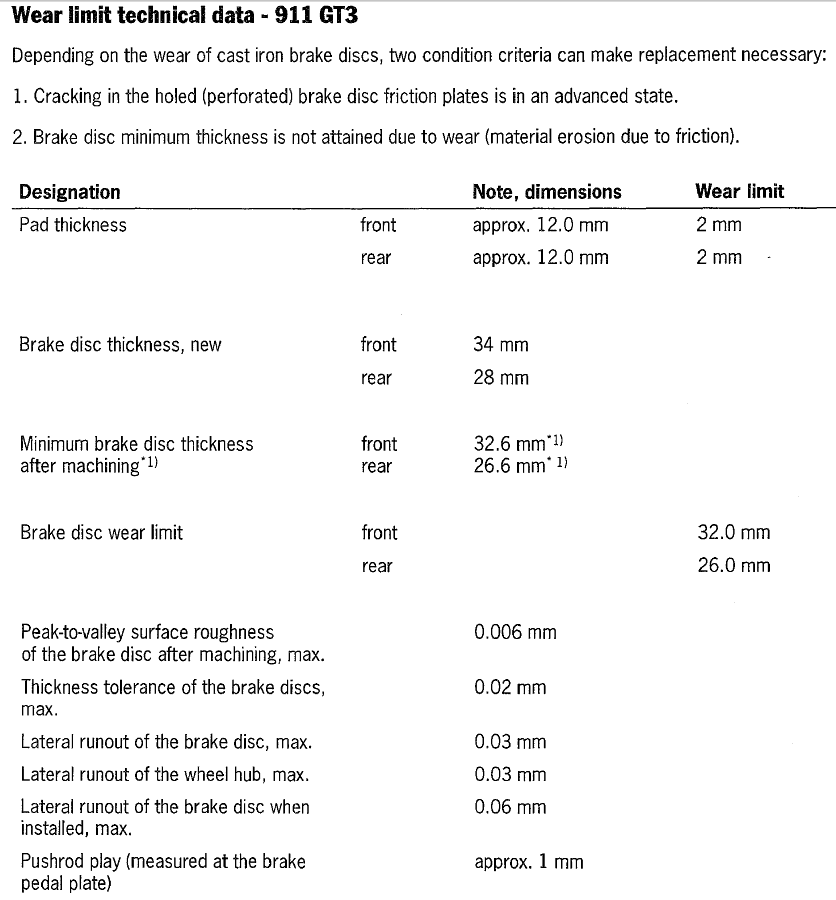
Disc Rotor Minimum Thickness Chart A Visual Reference of Charts

Repair Guides

Minimum Thickness Brake Rotors Chart

Repair Guides Front Disc Brakes Brake Disc (rotor)

Minimum Rotor Thickness Chart Toyota A Visual Reference of Charts
Understanding the Brake Rotor Minimum Thickness Chart
Web Rotors Have A Minimum Thickness That Is Typically Written On The Side Of The Rotor.
Web When It Reaches What We Call The “Minimum Thickness”.
Web Locate The Minimum Thickness Standard:
*** 0.807” On 18” Premium Brakes.
Related Post: