
Ionisation Energy Chart
Ionisation Energy Chart - A high value of ionization energy shows a high attraction between the electron and the nucleus. The energy required to remove the outermost electron from an atom or a positive ion in its ground level. 1st in a periodic table cityscape style. Learn the definition, trend on the periodic table, first & second ionization energies, see a chart and much more. As described above, ionization energies are dependent upon the atomic radius. The first of these quantities is used in atomic physics, the second in chemistry, but both refer to the same basic property of the element. Web one is that when electrons start to fill p orbital the ionization energy goes down a little. Web ionization energy is the energy required to remove an electron from a neutral atom in its gaseous phase. Web what is ionization energy. Web the 1st ionization energy of the element m is a measure of the energy required to remove one electron from one mole of the gaseous atoms m. Ionization energy is always positive. Web complete and detailed technical data about the element $$$elementname$$$ in the periodic table. Learn the definition, trend on the periodic table, first & second ionization energies, see a chart and much more. As described above, ionization energies are dependent upon the atomic radius. Web these tables list values of molar ionization energies, measured in kj⋅mol −1. Web ionization energy is the energy required to remove an electron from a neutral atom in its gaseous phase. Web first ionization energy (kj/mol) 1st in a periodic table cityscape style. On the periodic table, first ionization energy generally decreases as you move down a group. Web ionization energy is the amount of energy needed to remove an electron from a neutral gaseous atom and form an ion. Web ionization energies of the elements. The stronger an electron is bound to an atom the more ionization energy it requires, therefore these two are directly proportional. Learn the definition, trend on the periodic table, first & second ionization energies, see a chart and much more. Web what is ionization energy. Learn its chemical equation, values, trends across a period. Web ionization energies of the elements. Web explore how ionization energy changes with atomic number in the periodic table of elements via interactive plots. Web first ionization energy (kj/mol) Web what is ionization energy? The first of these quantities is used in atomic physics, the second in chemistry, but both refer to the same basic property of the element. Since going from right to left on the periodic table, the atomic radius increases, and the ionization energy increases from left to right in the periods and up the groups. Up to date, curated data provided by mathematica 's elementdata function from wolfram research, inc. The stronger an electron is bound to an atom the more ionization energy it requires,. Ionization energy is always positive. The stronger an electron is bound to an atom the more ionization energy it requires, therefore these two are directly proportional. Web chemists define the ionization energy (\(i\)) of an element as the amount of energy needed to remove an electron from the gaseous atom \(e\) in its ground state. Web complete and detailed technical. Web ionization energy is a measure of the energy needed to pull a particular electron away from the attraction of the nucleus. The first of these quantities is used in atomic physics, the second in chemistry, but both refer to the same basic property of the element. Web chemists define the ionization energy (\(i\)) of an element as the amount. Web ionization energy is a measure of the energy needed to pull a particular electron away from the attraction of the nucleus. The first of these quantities is used in atomic physics, the second in chemistry, but both refer to the same basic property of the element. Web ionization energy chart of all the elements is given below. Web these. Up to date, curated data provided by mathematica 's elementdata function from wolfram research, inc. The ionization energy of the elements within a period. Web values from crc are ionization energies given in the unit ev; Web ionization energies of the elements. Other values are molar ionization energies given in the unit kj/mol. Web ionization is the process of removing an electron from a neutral atom (or compound). The first of these quantities is used in atomic physics, the second in chemistry, but both refer to the same basic property of the element. Web an element's first ionization energy is the energy required to remove the outermost, or least bound, electron from a. Up to date, curated data provided by mathematica 's elementdata function from wolfram research, inc. Since going from right to left on the periodic table, the atomic radius increases, and the ionization energy increases from left to right in the periods and up the groups. Also, learn first & second ionization energies. Learn its chemical equation, values, trends across a. First ionization energy, second ionization energy as well as third ionization energy of the elements are given in this chart. Another is when each of 3 p orbitals have one electron they start to pair as new ones are added (like when moving from nitrogen to oxygen). Web first ionization energy (kj/mol) Other values are molar ionization energies given in. On the periodic table, first ionization energy generally increases as you move left to right across a period. Web complete and detailed technical data about the element $$$elementname$$$ in the periodic table. Web explore how ionization energy changes with atomic number in the periodic table of elements via interactive plots. Web chemists define the ionization energy (\(i\)) of an element as the amount of energy needed to remove an electron from the gaseous atom \(e\) in its ground state. Up to date, curated data provided by mathematica 's elementdata function from wolfram research, inc. \(i\) is therefore the energy required for the reaction Click here to buy a book,. Also, learn first & second ionization energies. Web these tables list values of molar ionization energies, measured in kj⋅mol −1. Web one is that when electrons start to fill p orbital the ionization energy goes down a little. Web ionization energies of the elements. Web ionization energy (the energy associated with forming a cation) decreases down a group and mostly increases across a period because it is easier to remove an electron from a larger, higher energy orbital. To convert to kj/mol, multiply by 96.4869. Check out this video for more details: Another is when each of 3 p orbitals have one electron they start to pair as new ones are added (like when moving from nitrogen to oxygen). Ionization energy is always positive.
Ionization Energy Chart Periodic Table

The Parts of the Periodic Table
Periodic Trends in Ionization Energy CK12 Foundation
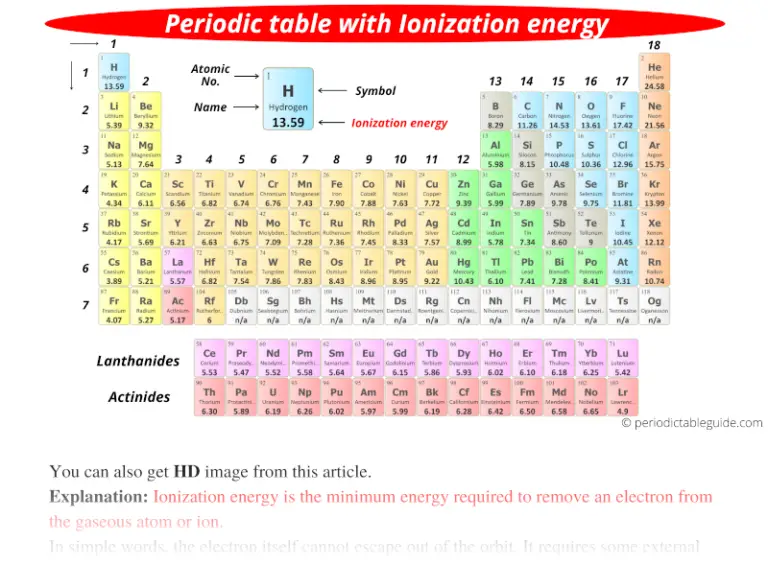
Periodic table with Ionization Energy Values (Labeled Image)
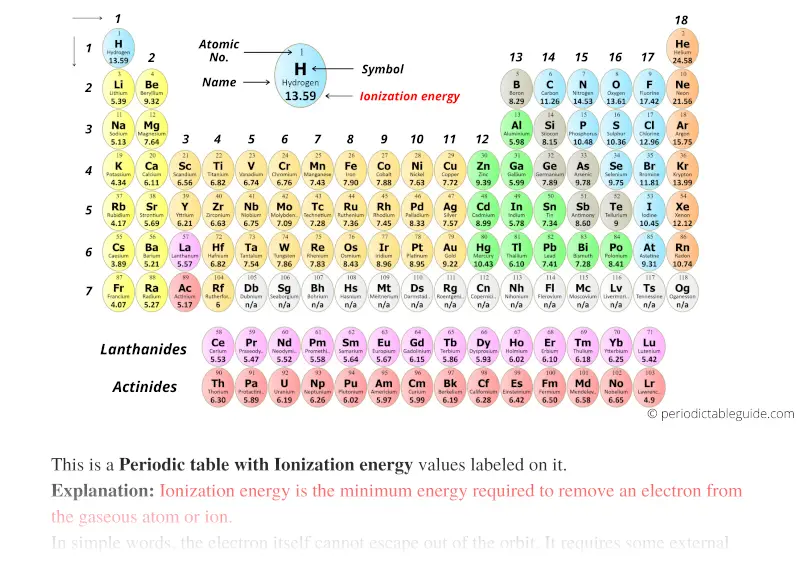
Periodic table with Ionization Energy Values (Labeled Image)
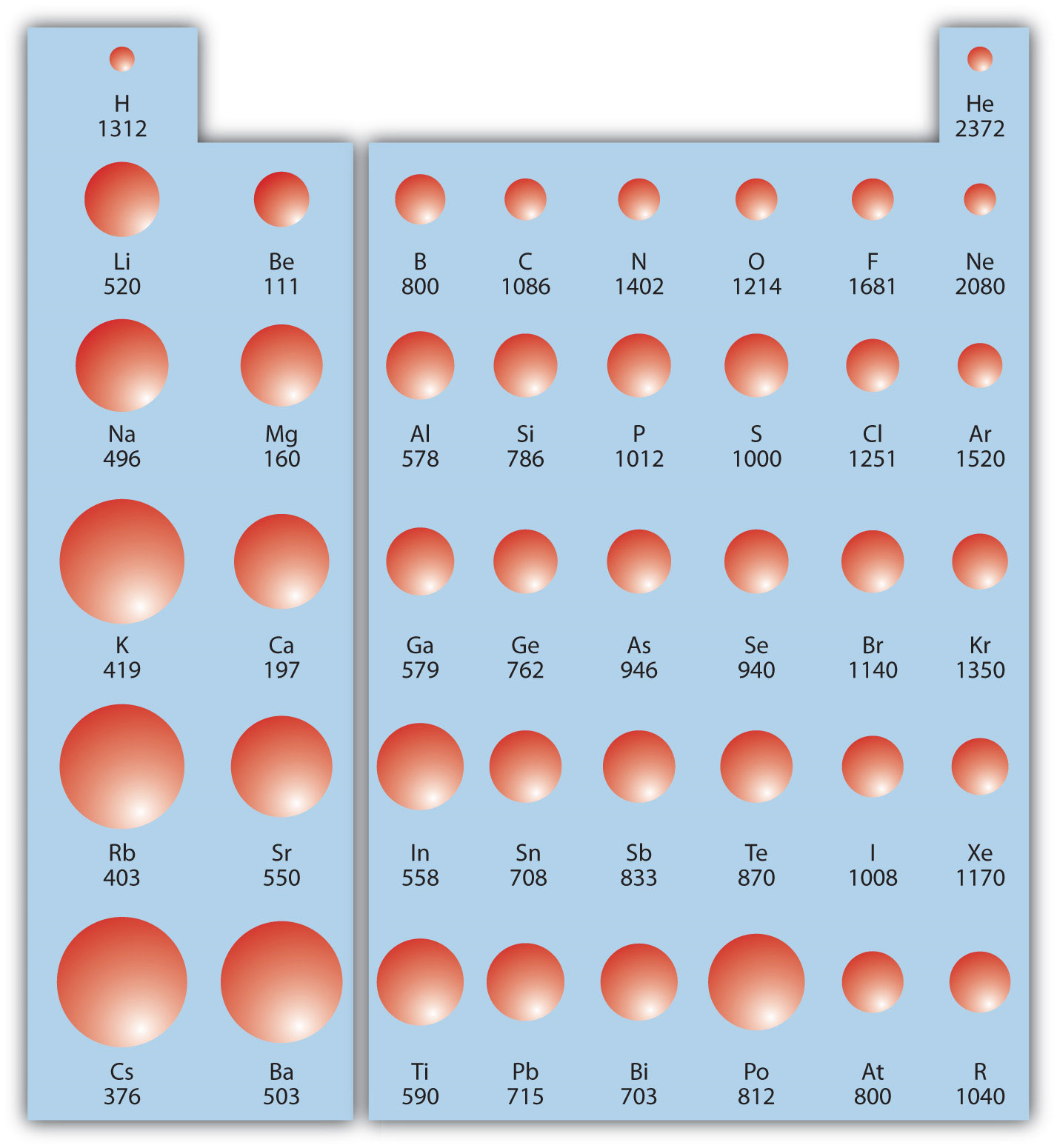
9.9 Periodic Trends Atomic Size, Ionization Energy, and Metallic
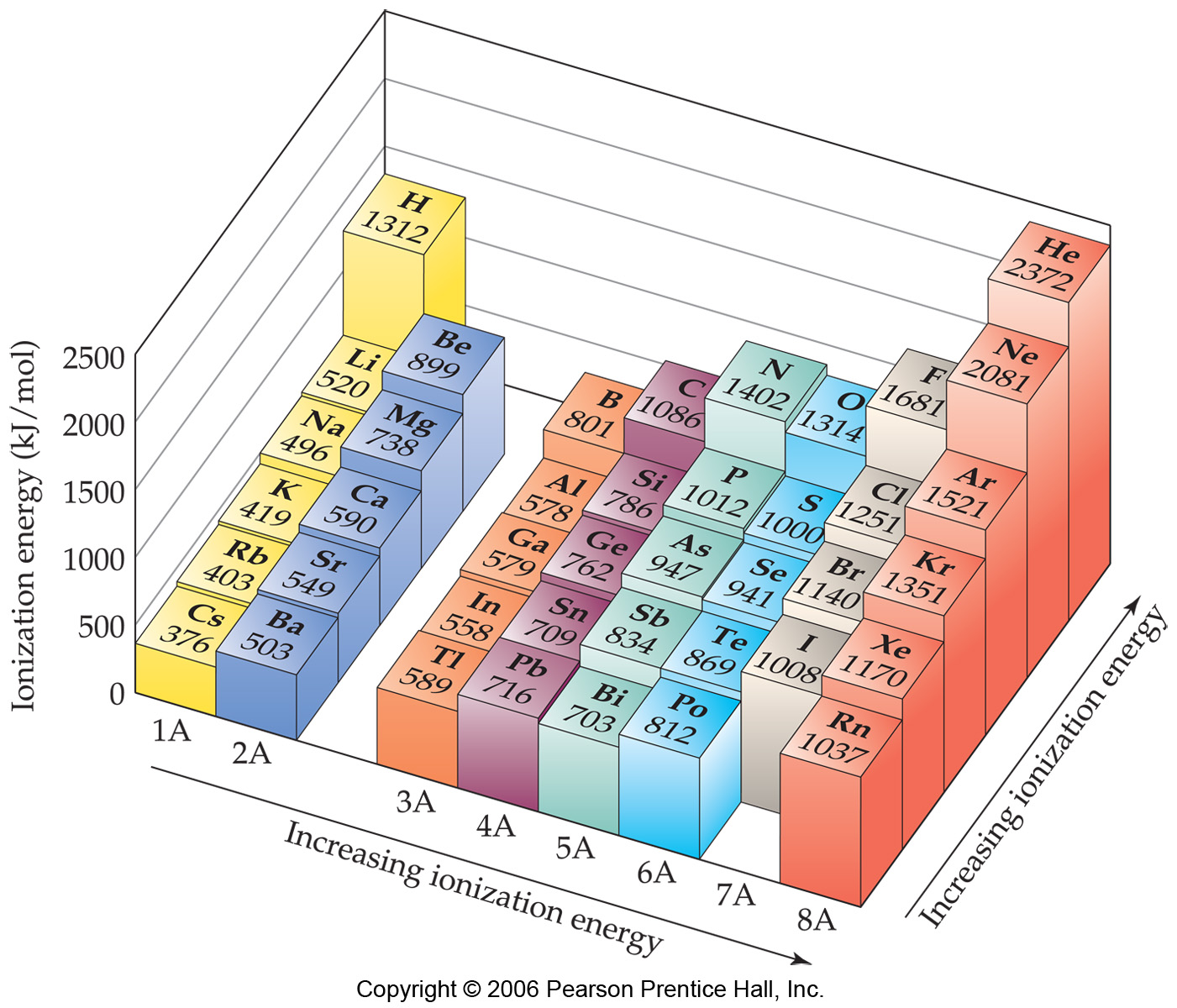
Pin by Cristina Baldacci on Chemistry Education Chemistry education
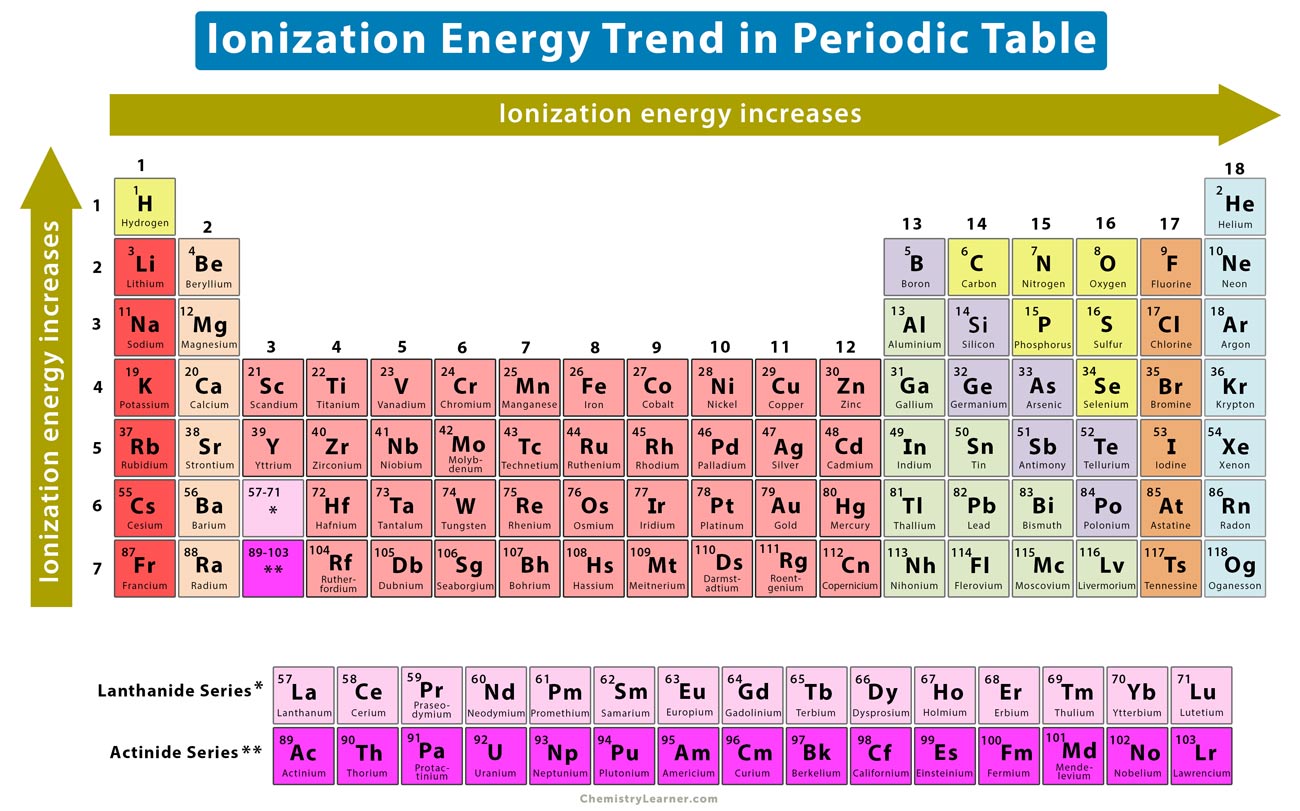
Among the Following Which Element Has the Lowest Ionization Energy
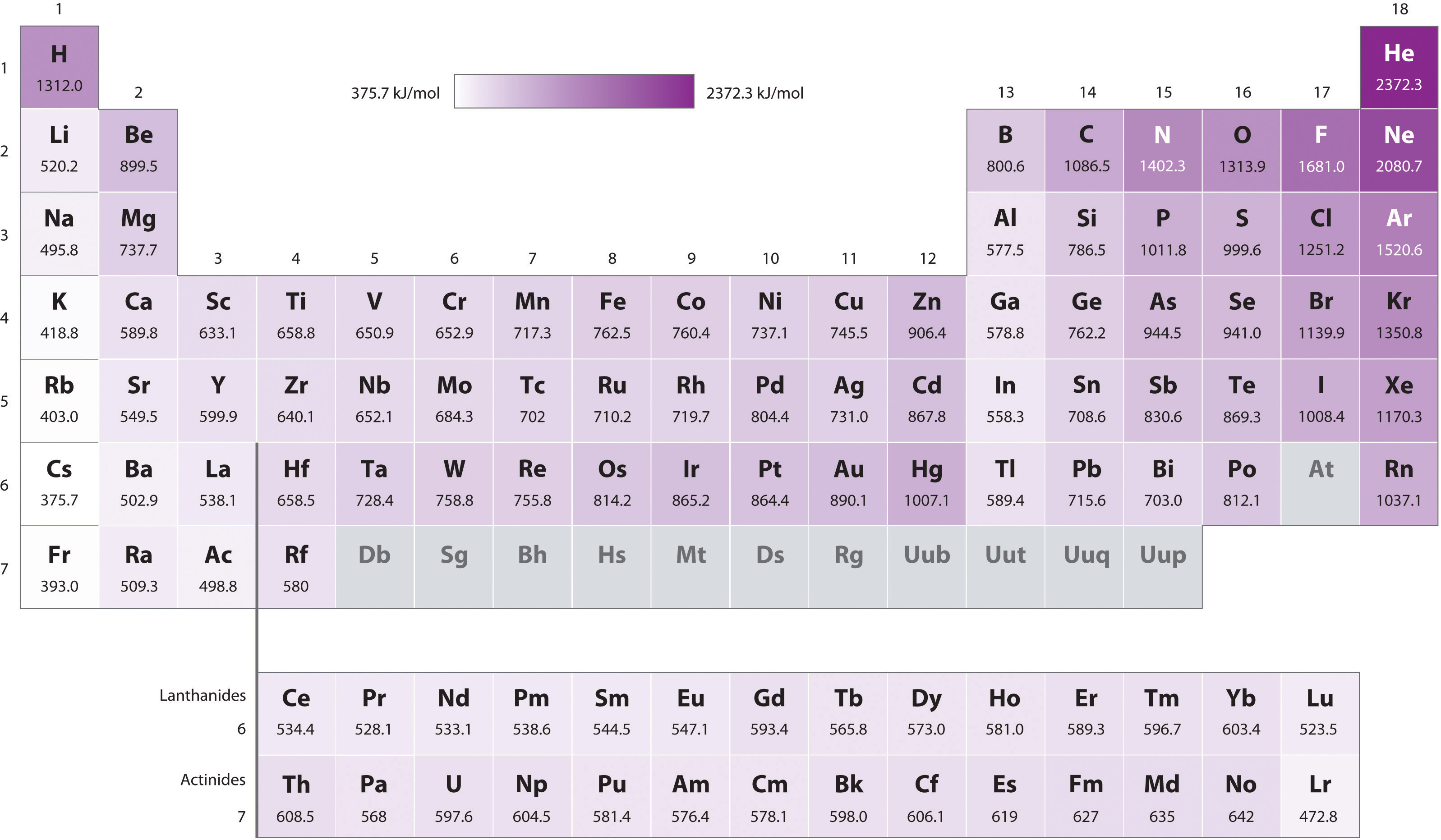
8.4 Ionization Energy Chemistry LibreTexts
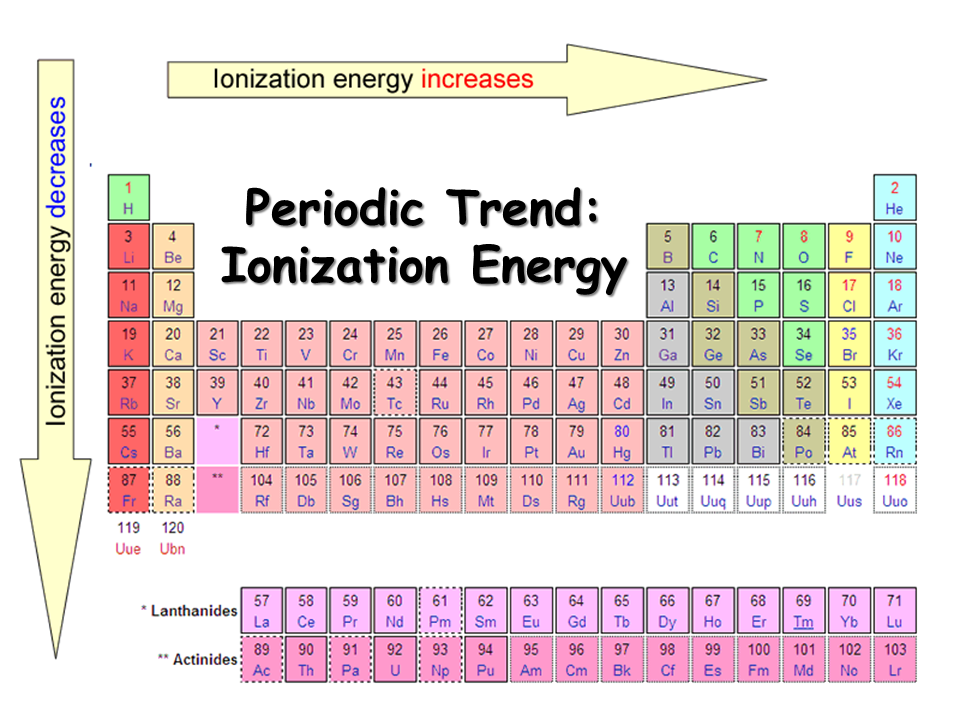
Ionization Enthalpy NEET Lab
First Ionization Energy, Second Ionization Energy As Well As Third Ionization Energy Of The Elements Are Given In This Chart.
The Measurement Is Performed In The Gas Phase On Single Atoms.
Since Going From Right To Left On The Periodic Table, The Atomic Radius Increases, And The Ionization Energy Increases From Left To Right In The Periods And Up The Groups.
Web The 1St Ionization Energy Of The Element M Is A Measure Of The Energy Required To Remove One Electron From One Mole Of The Gaseous Atoms M.
Related Post:
