
Rocks And Minerals Chart
Rocks And Minerals Chart - Web interactive guide to hundreds of rocks and minerals. For example, granite is an igneous rock composed of three main minerals—orthoclase feldspar, quartz, and biotite mica—while gold is a metallic element made up of 79. Web if you’re looking for a comprehensive guide to identifying rocks and minerals, a field guide to rocks and minerals is a great option. Sedimentary rocks such as limestone or shale are hardened sediment with. First, decide whether your rock is igneous, sedimentary, or metamorphic. Identify 30 rocks and minerals, crack open a geode, grow crystals on a rock, make your own sedimentary rock, and much more! If you have any questions about the flow charts. Hold the sample in the water with your holding device and then write down the second measurement. Web when identifying a rock or mineral, observing its color is a great first step. For example, malachite is always green. Identify 30 rocks and minerals, crack open a geode, grow crystals on a rock, make your own sedimentary rock, and much more! Web rock identification tips. Web if you’re looking for a comprehensive guide to identifying rocks and minerals, a field guide to rocks and minerals is a great option. Rocks do not have a definite chemical composition. For example, granite is an igneous rock composed of three main minerals—orthoclase feldspar, quartz, and biotite mica—while gold is a metallic element made up of 79. Hold the sample in the water with your holding device and then write down the second measurement. Some minerals always show up in certain colors, making them easy to spot. These charts include many rocks and minerals and will help you identify the samples in your mini me geology kits and those commonly found in nature. Web photographs and information for a large collection of igneous, metamorphic and sedimentary rocks. Web when identifying a rock or mineral, observing its color is a great first step. It is usually composed of a series of diagrams and tables that provide information on the physical and chemical properties of rocks and minerals. Once you have visibility into the stone you’ll start to understand what natural inclusions look like and what synthetic inclusions look like. Compact size makes it easy to take with you on the go. First, decide. Terminology can be referenced in the illustrated glossary of terms that is located at the end of the descriptive information. Grape agate is a popular mineral specimen with the color and the shape of a bunch of grapes. Most rocks will simply feel coarse or rough, but if you feel something different be sure to make a note of it.. Web goethite—the brown oxide mineral of soils and iron ore. For instance, quartz can be clear, pink, or even purple. The chart may also include color photographs and descriptions of each rock or mineral. Gypsum—shown in its prettiest form, desert roses. halite—also known as rock salt, this evaporite mineral sits at your table. Web run your fingers over the surface. Web flow charts or, dichotomous keys, are a great tool for identifying rocks and minerals when you are learning about the different sample properties. This site has been providing detailed information and photos of hundreds of mineral and gemstone since 1997 and is one of the leading education resources on minerals and gemstones. Place the container on the scale and. Web the key difference between a mineral and a rock is that minerals are the chemical building blocks of rocks, while rocks are objects composed of one or more minerals. Web photographs and information for a large collection of igneous, metamorphic and sedimentary rocks. Once you have visibility into the stone you’ll start to understand what natural inclusions look like. Most rocks will simply feel coarse or rough, but if you feel something different be sure to make a note of it. Web the key difference between a mineral and a rock is that minerals are the chemical building blocks of rocks, while rocks are objects composed of one or more minerals. Identify 30 rocks and minerals, crack open a. This is your wet weight (ww). The loop allows you to see inside the stones assuming they’re transparent. Web the mineral and gemstone kingdom: Gypsum—shown in its prettiest form, desert roses. halite—also known as rock salt, this evaporite mineral sits at your table. Hematite—iron oxide mineral of many forms including this kidney ore. Rocks do not have a definite chemical composition. Web the key difference between a mineral and a rock is that minerals are the chemical building blocks of rocks, while rocks are objects composed of one or more minerals. Web the mineral and gemstone kingdom: Hold the string and suspend the specimen in the water. Web add water to the cup. Web when identifying a rock or mineral, observing its color is a great first step. Web interactive guide to hundreds of rocks and minerals. Web the key difference between a mineral and a rock is that minerals are the chemical building blocks of rocks, while rocks are objects composed of one or more minerals. Web jewelers loop and tweezers. Web. Web rocks and minerals are important for learning about earth materials, structure, and systems. First, decide whether your rock is igneous, sedimentary, or metamorphic. Some rocks and minerals can come in various colors. Grape agate is a popular mineral specimen with the color and the shape of a bunch of grapes. Hold the string and suspend the specimen in the. Sedimentary rocks such as limestone or shale are hardened sediment with. Terminology can be referenced in the illustrated glossary of terms that is located at the end of the descriptive information. Web if you’re looking for a comprehensive guide to identifying rocks and minerals, a field guide to rocks and minerals is a great option. A rock identification chart is a tool used to identify rocks and minerals. Web rock identification tips. Web flow charts or, dichotomous keys, are a great tool for identifying rocks and minerals when you are learning about the different sample properties. Igneous rocks such as granite or lava are tough, frozen melts with little texture or layering. Graphite—the stuff of pencils has more rugged uses too. Web the rocks and minerals are presented in alphabetical order with their assigned numbers shown to the left. Tie a string around the specimen. A rock is a naturally occurring aggregate of minerals and/or mineraloids. If you have any questions about the flow charts. Grape agate is a popular mineral specimen with the color and the shape of a bunch of grapes. Studying these natural objects incorporates an understanding of earth science, chemistry, physics, and math. Some rocks have textures that are unique enough that they can aid in identification. For instance, quartz can be clear, pink, or even purple.
List 101+ Pictures Rocks And Minerals List With Pictures Updated
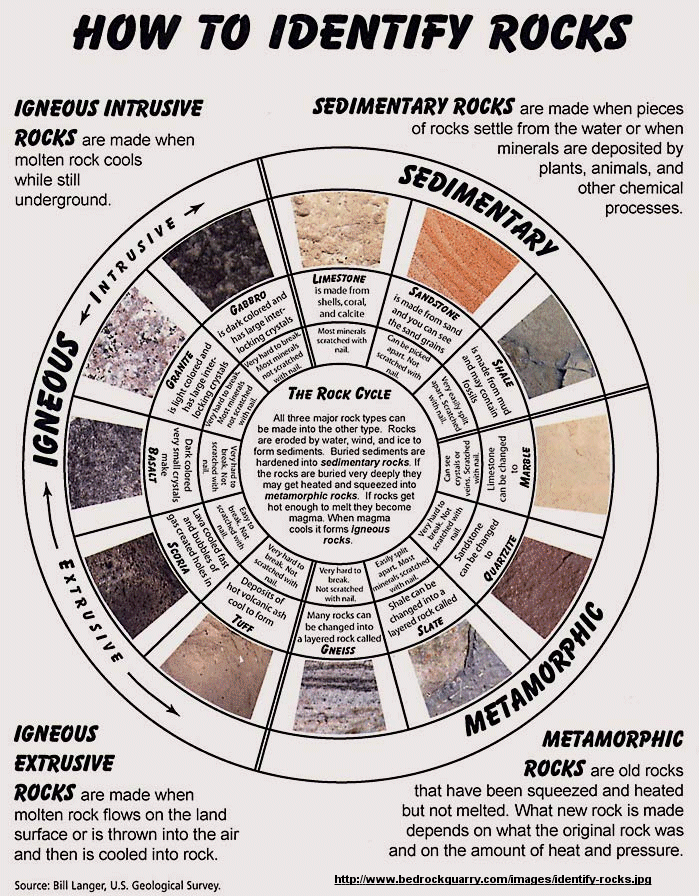
Rocks and Mineral Identification Table
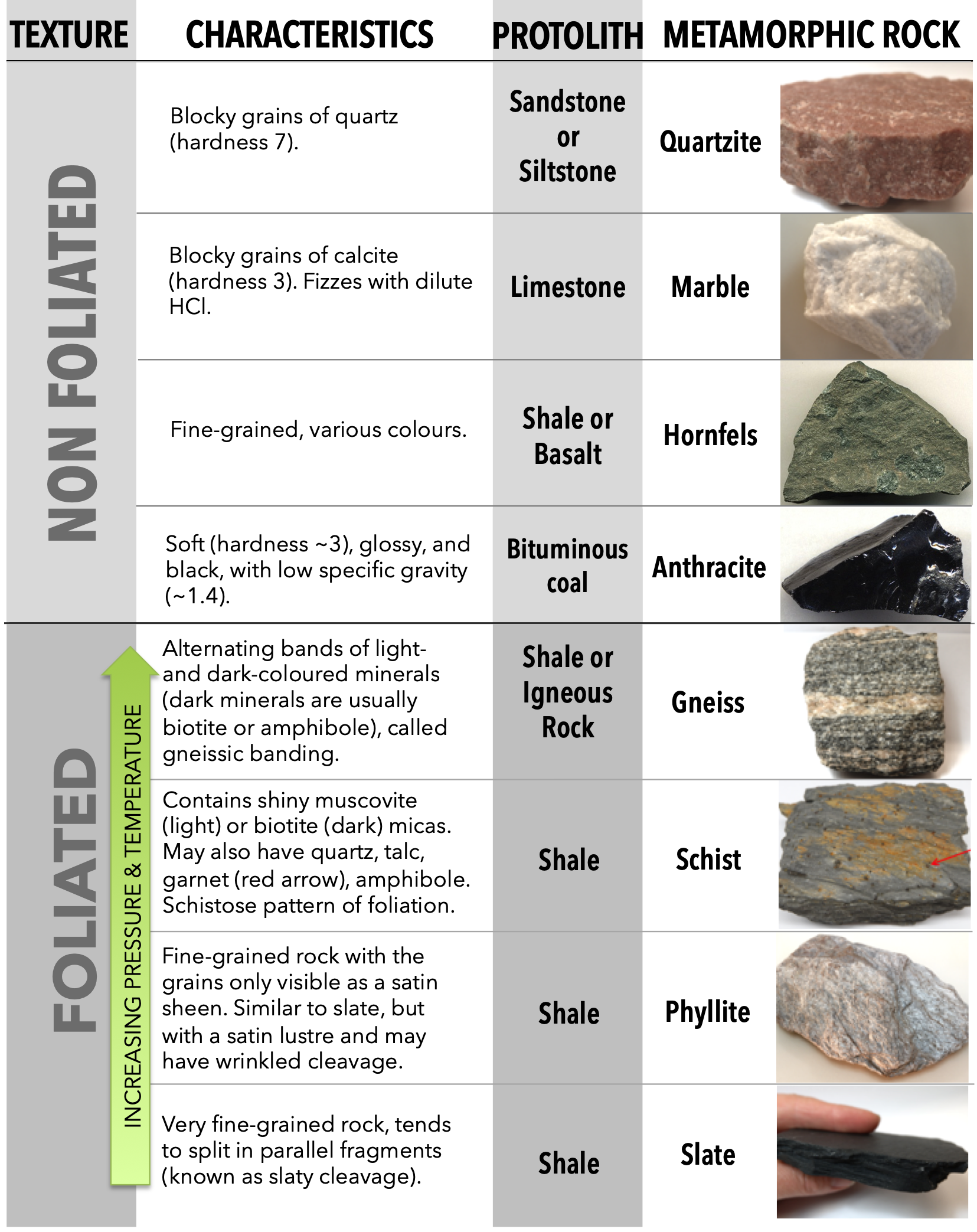
Rocks And Minerals Chart Identification
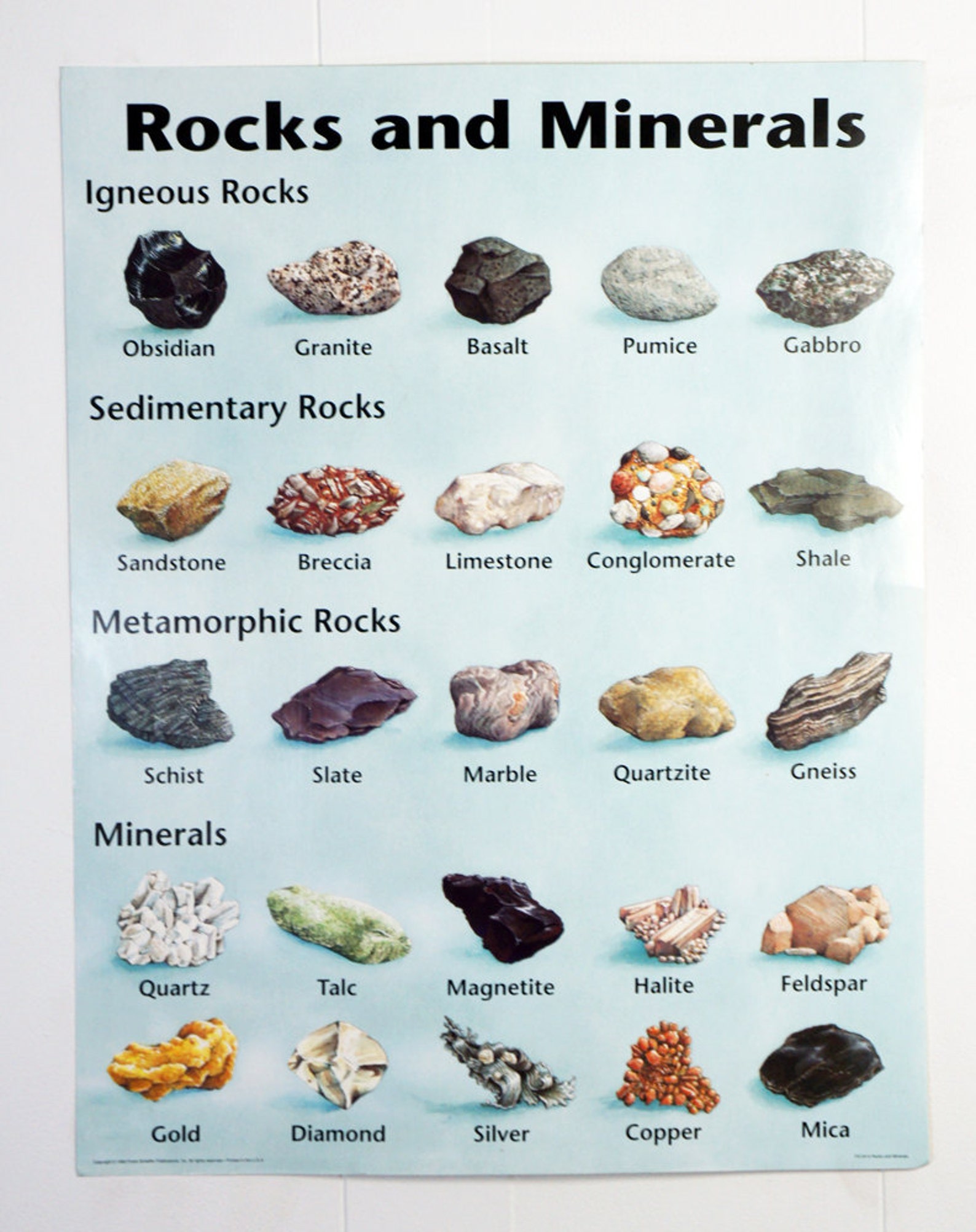
Vintage Geology Wall Chart Rocks & Minerals Etsy

Printable Rock Identification Chart Customize and Print
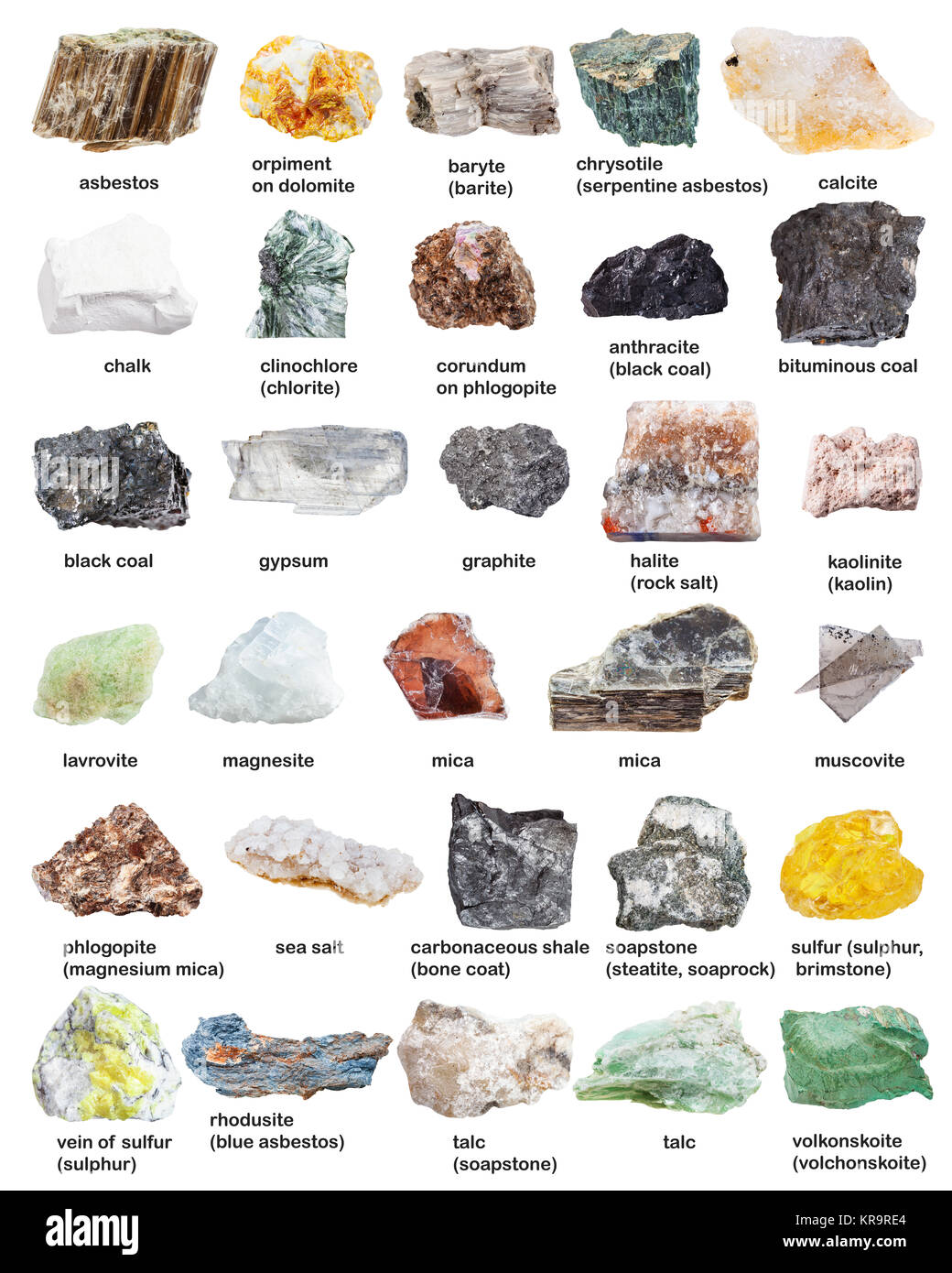
various mineral stones minerals with names Stock Photo Alamy
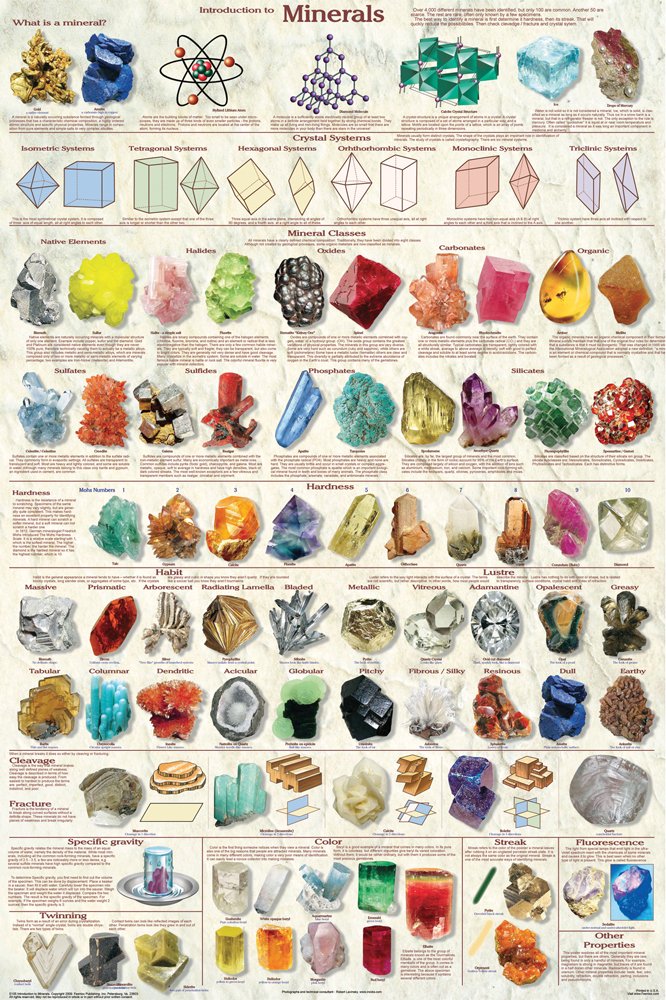
Crystals and Minerals Chart at The Crystal Healing Shop

Rock Mineral Identification Chart
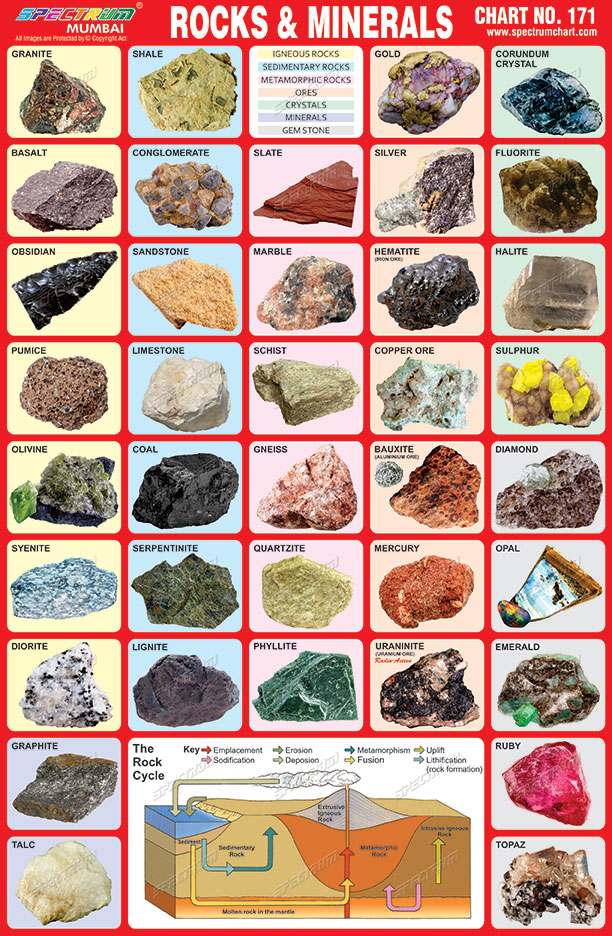
Spectrum Educational Charts Chart 171 Rock & Minerals

Chart Of Types Of Rocks
Gypsum—Shown In Its Prettiest Form, Desert Roses. Halite—Also Known As Rock Salt, This Evaporite Mineral Sits At Your Table.
Web The Mineral And Gemstone Kingdom Is A Free Informational And Educational Guide To Rocks, Minerals, Gemstones, And Jewelry.
Hold The String And Suspend The Specimen In The Water.
Web Fill Your Container With Water High Enough To Submerge The Specimen.
Related Post: