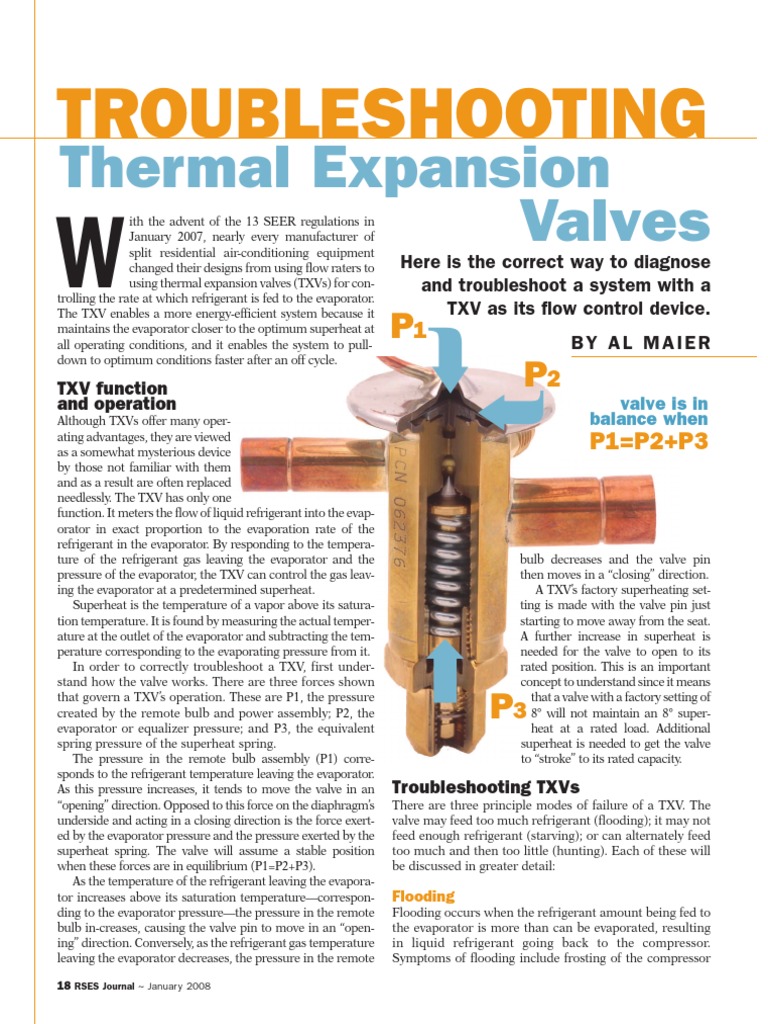
Txv Troubleshooting Chart
Txv Troubleshooting Chart - Wednesday, march 1, 2017 be social | take part keep me updated. Sensing bulb placement — an improperly mounted sensing bulb can often result in the txv hunting. Too far open is also called “overfeeding” and it means that boiling refrigerant is being fed too far through the evaporator coil, and this would show up in low superheat. Web diagnosing txv problems can be difficult and uncertain. It requires instruments and gauges to be hooked up to the system and calculations (superheat) made to determine if the txv functions properly. I can get you through this! The most common failure mode of a txv is for the valve to fail closed. Room temperature too high, with high superheat: Once you verify the cause of the issue, you’ll likely have to adjust the txv, replace a component, or replace the whole txv. Web this article describes how to install, test, or diagnose problems with a thermostatic expansion valve used on air conditioners or heat pumps or similar refrigeration equipment. Room temperature too high, with high superheat: The purpose of a txv is to maintain. However, diagnosing txv problems is not an easy task. Some txvs are set to maintain a specific superheat from the factory, but a few are adjustable. Typically a txv will use spring pressure to close the valve and an opposing pressure, Web txv application, charging and troubleshooting. Web this article describes how to install, test, or diagnose problems with a thermostatic expansion valve used on air conditioners or heat pumps or similar refrigeration equipment. Thermostatic expansion valve are great hvac technology that many hvac technician struggle to understand. Through this bulletin climatemaster will attempt to offer some clarity and certainty when diagnosing possible txv problems. Web as metering devices, txvs can adjust the size of their orifice to maintain a constant superheat. Web testing a thermal expansion valve (txv) can be done in just a few simple steps. Web when txvs are malfunctioning, the performance of a refrigeration system can be severely affected. The most common failure mode of a txv is for the valve to fail closed. Pressure drop across evaporator too high. However, diagnosing txv problems is not an easy. Web txv troubleshooting tips. Web this article describes how to install, test, or diagnose problems with a thermostatic expansion valve used on air conditioners or heat pumps or similar refrigeration equipment. Room temperature too high, with high superheat: Some txvs are set to maintain a specific superheat from the factory, but a few are adjustable. Wednesday, march 1, 2017 be. Web a plugged txv will underfeed the evaporator and produce symptoms that include the evaporator operating under a vacuum or very low pressure. However, diagnosing txv problems is not an easy task. Web in this guide, we walk technicians through how to adjust a thermostatic expansion valve (txv) and explain how these parts works and when they need to be. Too far open is also called “overfeeding” and it means that boiling refrigerant is being fed too far through the evaporator coil, and this would show up in low superheat. Tips and tricks for txvs in air conditioning systems. Some txvs are set to maintain a specific superheat from the factory, but a few are adjustable. Updated with refreshed diagrams. Web this article describes how to install, test, or diagnose problems with a thermostatic expansion valve used on air conditioners or heat pumps or similar refrigeration equipment. The purpose of a txv is to maintain. Too far open is also called “overfeeding” and it means that boiling refrigerant is being fed too far through the evaporator coil, and this would. Txvs are designed to maintain constant superheat, and many people suspect txv issues when the suction pressure is low. The most common failure mode of a txv is for the valve to fail closed. These include improper thermostatic valve installation, wrong sensor bulb location, sticking tevs, whistling tevs, hunting tevs and other problems. Web i discuss how to troubleshoot txv. It requires instruments and gauges to be hooked up to the system and calculations (superheat) made to determine if the txv functions properly. Web now refer to the “txv system charge level chart “a” or “b” pages 3 or 4 (see note below) and find the point where high side pressure and liquid line temperature intersect on the chart. Typically. A txv may fail either too far open or too far closed. Pressure drop across evaporator too high. It requires instruments and gauges to be hooked up to the system and calculations (superheat) made to determine if the txv functions properly. Poor sensing bulb mounting includes things like the bulb not being in good contact with the pipe, not being. Web in this guide, we walk technicians through how to adjust a thermostatic expansion valve (txv) and explain how these parts works and when they need to be adjusted appropriately. The most common failure mode of a txv is for the valve to fail closed. Web as metering devices, txvs can adjust the size of their orifice to maintain a. A plugged valve will not respond to a superheat decrease or will suddenly. Thermostatic expansion valve are great hvac technology that many hvac technician struggle to understand. Thermostatic expansion valves (txvs) are often misdiagnosed as the root problem in poorly performing air conditioning and heat pump systems. Room temperature too high, with high superheat: Web now refer to the “txv. Web thermostatic expansion valve troubleshooting. The most common failure mode of a txv is for the valve to fail closed. A txv may fail either too far open or too far closed. As we enter the cooling season, we must install, operate and maintain thermal expansion valves (txvs). Web to ensure maximum txv performance, here are some tips on bulb mounting/location, brazing, valve orientation, external equalizer use, superheat adjustment, and troubleshooting. Web txv troubleshooting tips. However, diagnosing txv problems is not an easy task. Txvs are designed to maintain constant superheat, and many people suspect txv issues when the suction pressure is low. Web testing a thermal expansion valve (txv) can be done in just a few simple steps. The metering device on an evaporator. Web proper thermostatic expansion valve (txv) function is key to a variety of system deficiencies. If they intersect in the “normal” band, the system is close to correct system charge. Too far open is also called “overfeeding” and it means that boiling refrigerant is being fed too far through the evaporator coil, and this would show up in low superheat. Web bryan gives a masterclass to kalos techs on why txv/tev valves are misdiagnosed, how to properly diagnose a failed txv, and how thermostatic expansion valves work. These include improper thermostatic valve installation, wrong sensor bulb location, sticking tevs, whistling tevs, hunting tevs and other problems. Web now refer to the “txv system charge level chart “a” or “b” pages 3 or 4 (see note below) and find the point where high side pressure and liquid line temperature intersect on the chart.
How to Diagnose a TXV Failure HVAC School
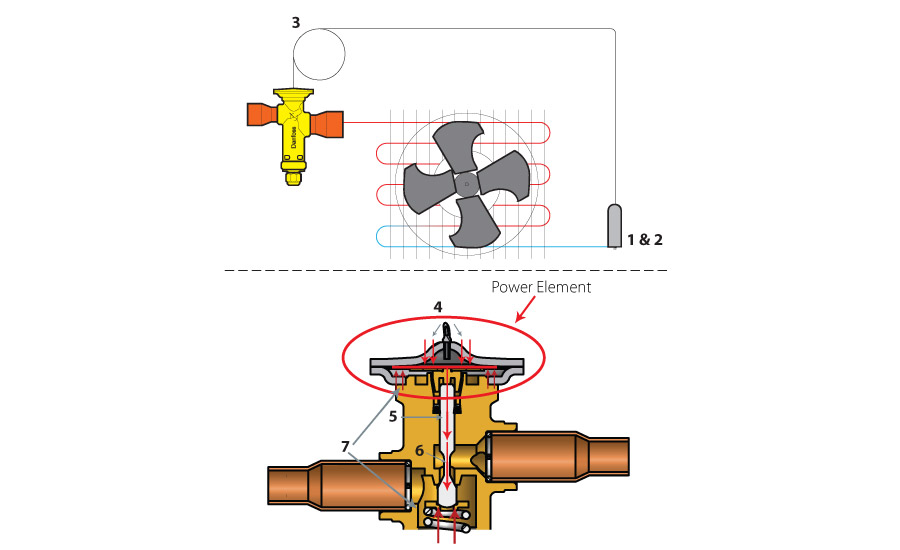
Operating and Troubleshooting Thermostatic Expansion Valves 201601

How to adjust a TXV, TEV or TX Valve HVAC School
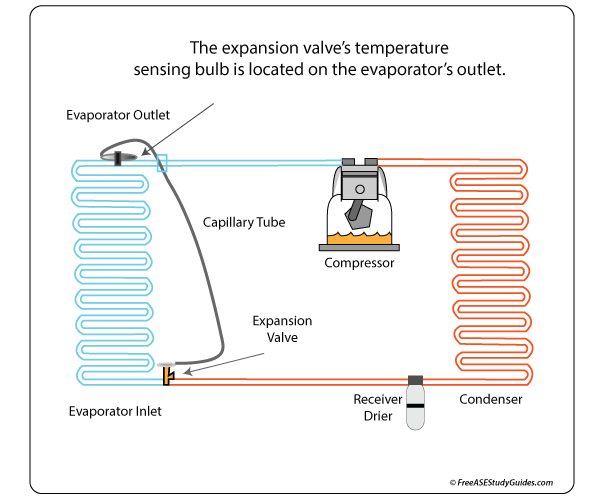
Troubleshooting TXV Thermostatic Expansion Valves
21TroubleshootingTXV.pdf Valve Temperature

TXV Troubleshooting
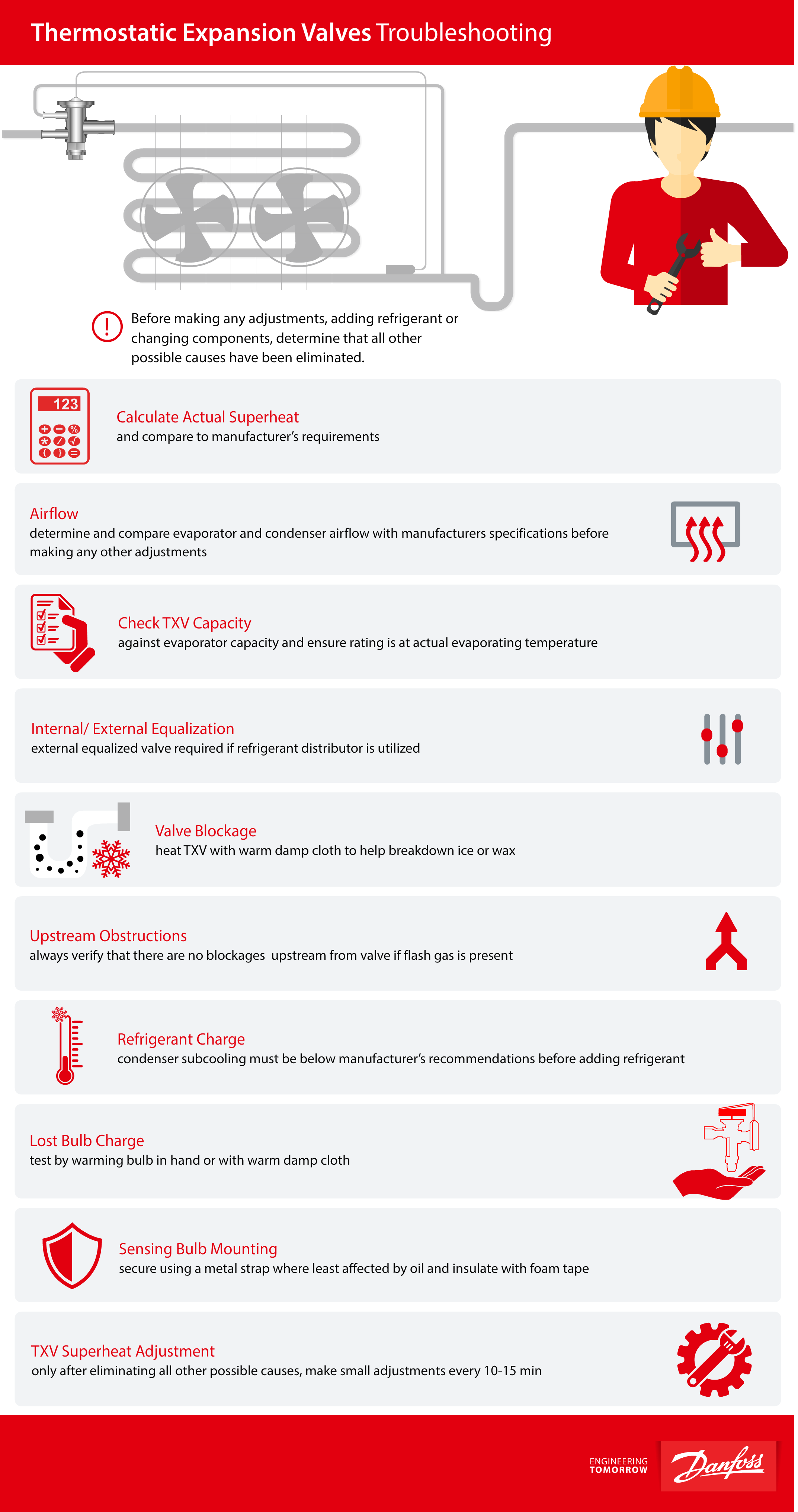
TXV troubleshooting tips Danfoss
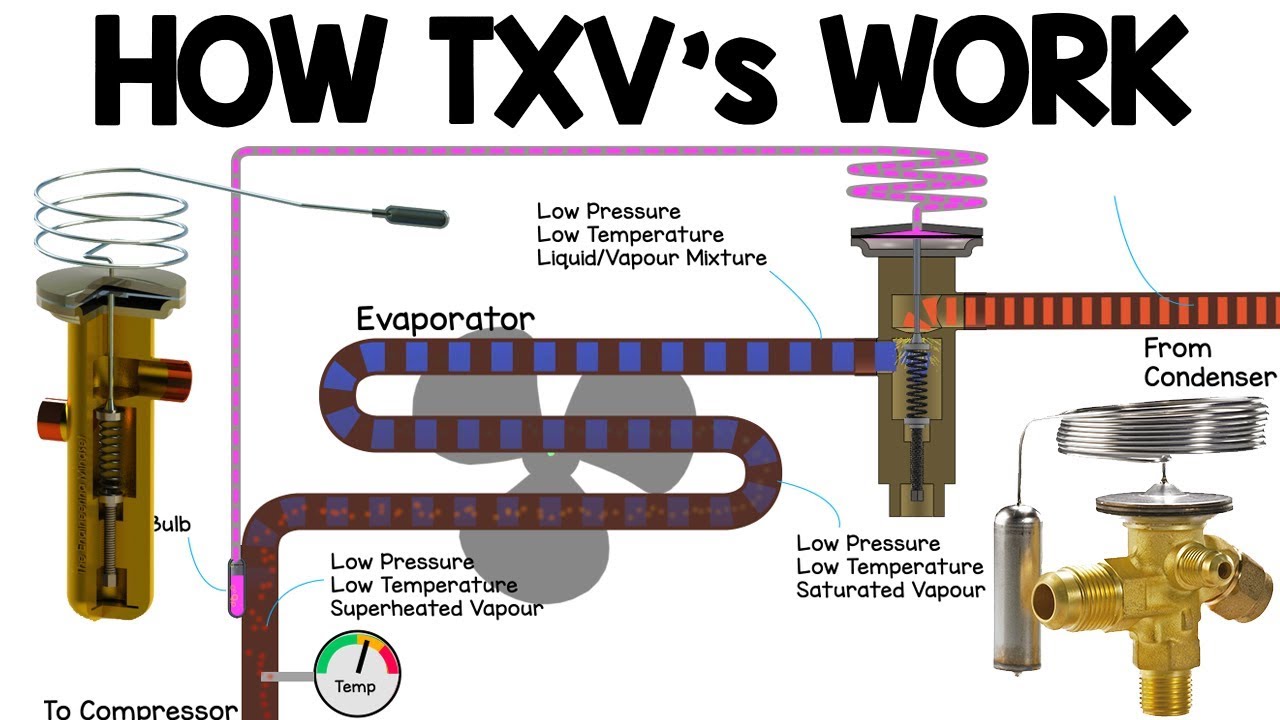
How TXV works Thermostatic expansion valve working principle, HVAC
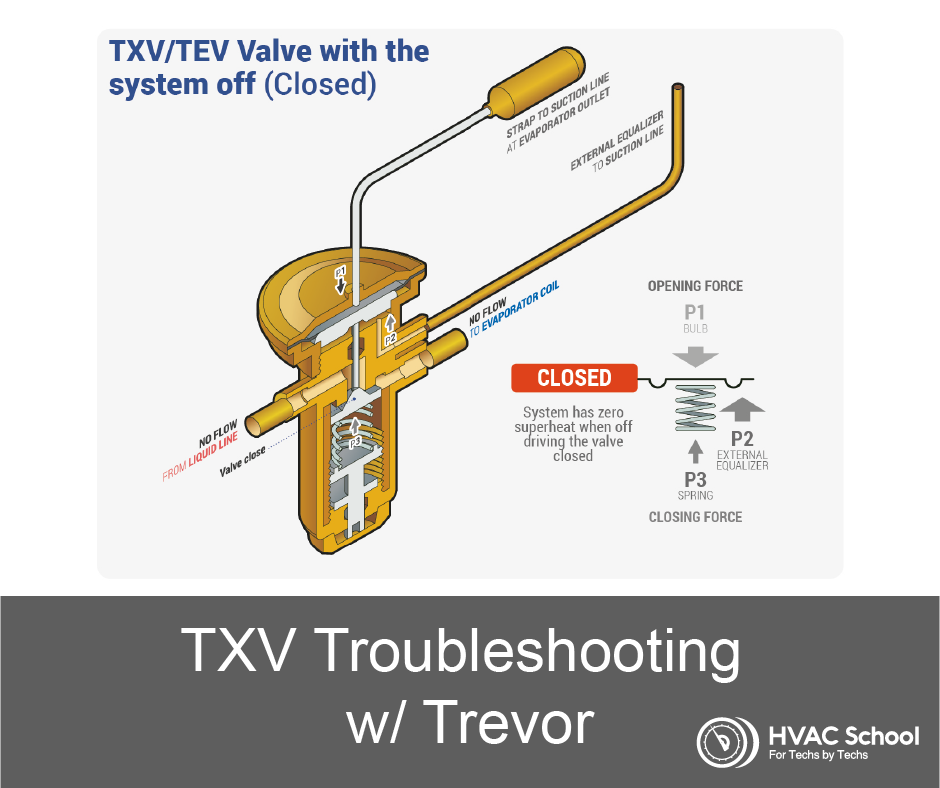
TXV Troubleshooting w/ Trevor HVAC School

Operating and Troubleshooting Thermostatic Expansion Valves 201601
Web How Do They Fail?
If The Superheat Is Well Above 14° At The Evaporator Outlet, With The Proper Subcool And Liquid Pressure Entering, Then You Have A Failed Closed (Underfeeding Valve).
Typically A Txv Will Use Spring Pressure To Close The Valve And An Opposing Pressure,
Pressure Drop Across Evaporator Too High.
Related Post: